
Sudan at the Edge: What a United Global Response Could Achieve
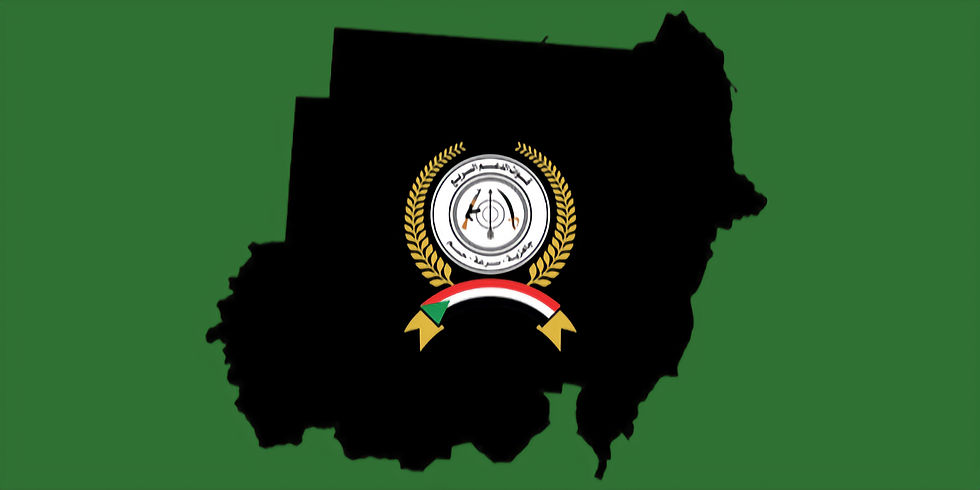
How can state-wide and international actors mitigate the humanitarian impact of escalating RSF violence in Sudan?
The annual International Rescue Committee [IRC] emergency watchlist for 2025 has
revealed that Sudan for the second year in a row has trumped their list, corroborating the fact that they have the greatest degenerative humanitarian crisis in the world: with an estimation of more than 150,000 people being killed, over 14 million having been displaced and 24.6 million being subject to famine (as of April 2025).
The longstanding grievances and administrative rivalries that have plagued the Sudanese
political landscape intensified following the 2019 overthrow of President Omar al-Bashir and the ensuing collapse of the transitional military/civilian government in the 2021 coup.
Disputes over integrating the Rapid Support Forces (RSF) into the national army (Sudanese
Armed Forces – SAF), coupled with suspicions that both military leaders sought to preserve
their own power and resources, deepened the rift. The conflict ignited on 15 April 2023 after
RSF redeployments were perceived as a direct threat by the SAF. (Pospisil. J, 2024) suggests
that it is a ‘classic case of a centre-periphery conflict’, highlighting that the civil war has epitomised the decades of neglect and exploitation experienced by communities outside Khartoum, as power has been concentrated in the hands of wealthy elites. Many argue that the RSF continues patterns of brutality rooted in its origins, as for when it was formally established in 2013, it drew heavily on the structure, personnel, and tactics of the Janjaweed militias. Now, reports show widespread killing amassing to genocide and escalated gendered-based violence.
How has Sudan interacted with the international community?
The appeal of pursuing overseas business and investment in Sudan is grounded within its
agricultural potential, geo-strategic location and abundance of natural resources. The UAE
has exerted influence with the RSF, providing arms and logistical support – aiming to
advance maritime regulation along the Red Sea Coast and progressing their economy away
from a dependency on oil, despite global condemnation. In contrast, Egypt’s involvement is
centred around acquiring cross-border security, with Cairo ensuring internal politics remain aligned with interests by supporting the SAF since the 2019 government collapse. (Al-Anani, K. 2023.) Consequently, this selective support has deepened internal polarisation and entrenched regional rivalries.
Policy Recommendations
A ceasefire agreement seems crucial for addressing the ongoing crisis.
With the expectation that greater collective advocacy will strengthen momentum
towards achieving it. In September 2025, the Quad (a coalition between Egypt, Saudi
Arabia, the UAE, and the US) proposed a plan envisioning a three-month
humanitarian pause followed by a permanent ceasefire, which could facilitate a
transition to civilian governance. While the Sudanese government has yet to publicly
respond, highlighting challenges in securing compliance, local actors such as Darfur
Governor Minni Arko Minnawi have stressed that any ceasefire must include the
withdrawal of the RSF, as failure to do so could risk effectively dividing the country.
Supporting this, most recently the G7 foreign ministers met in Canada on 13
November 2025, with US Secretary of State Marco Rubio calling for international
measures to cut off weapons supplies to the RSF, underlining the importance of
coordinated global action.
Intensifying efforts to halt the flow of weapons to armed groups in Sudan.
Recent concerns in the UK highlight the urgency of this approach: MPs questioned
whether British-made weapons were being diverted to the RSF, prompting criticism of
current export controls. In Parliament, one MP urged the government to suspend all
arms shipments to the UAE until it could be demonstrated that Emirati channels were
not fuelling the conflict. Although Foreign Secretary Yvette Cooper insisted that the
UK maintains rigorous export safeguards designed to prevent diversion, the
controversy underscores a broader need for stronger international oversight. [BBC]
Enhancing monitoring systems, tightening export regulations, and increasing
transparency among supplier states would help limit the RSF’s capacity to perpetuate
violence and reinforce international accountability efforts.
Strengthening coordinated diplomatic pressure to prevent Sudan’s conflict from
becoming further complicated in regional rivalries, particularly between Egypt and Ethiopia.
The EU has already emphasised the importance of supporting African-led peace efforts, and operationalising this commitment requires raising the diplomatic costs for regional powers whose actions undermine mediation attempts. In practice, this means the EU and AU should work together to apply sustained pressure on actors such as the UAE and Egypt, both of which continue to back opposing sides in the conflict. Additionally, any expanded Egyptian involvement in eastern Sudan should be strongly discouraged, as such moves risk triggering Ethiopian counter-intervention and transforming Sudan into another front for regional competition. Coordinated diplomacy of this kind is essential to reduce external interference, stabilise the conflict environment, and give African-led negotiations a genuine chance of success. (Gedebo, A. 2025)
Expanding humanitarian access is essential to mitigating the conflict in Sudan.
UNHCR and its partners have been scaling up operations in neighbouring states like
Chad, South Sudan, Ethiopia and the Central African Republic, where large numbers
of people have fled. Their work includes relocating new arrivals from overcrowded
border areas to safer sites and providing basic assistance such as shelter, medical care,
protection services, and cash support - efforts that are increasingly constrained by
global funding shortfalls. The situation has constrained transit centres and onward
travel assistants have become crucial to ensuring safe movement and resettlement. To
coordinate a more coherent response, UNHCR is collaborating with host governments
and over a hundred partner organisations through a regional response plan that spans
seven countries. Alongside emergency operations, development actors are engaging
through platforms designed to pool data and strengthen long-term support for
refugees, returnees and host communities, underscoring the need for sustained and
expanded humanitarian access across the region. Such a response has demonstrated
how effective humanitarian action can be when international and regional actors work
together, highlighting the urgency in needing additional assistance.
Conclusion
Sudan’s crisis underscores the complexities of international relations therefore stressing the
importance of weighing what is necessary against what is achievable – recognising that even
partial gains can reduce suffering and support future stability. Expanding humanitarian access is the most feasible short-term step, though still limited by insecurity and funding gaps. While securing a ceasefire remains vital for relief and political transition, resistance from both sides makes meaningful compliance unlikely. Overall, liaising with the African Union is essential as its regional legitimacy and firsthand knowledge can strengthen diplomatic efforts and promote more sustainable, locally informed solutions.
Bibliography
Pospisil, J. (2024). The New Geopolitical Formation in the Wider Horn of Africa:
Consequences for Europe. Austrian Institute for International Affairs. [online] Available at:
https://www.jstor.org/stable/resrep61086 [Accessed 14 Nov. 2025].
Gedebo, A.D. (2025). Egypt’s Expanding Role in the Horn of Africa. Netherlands Institute of International Relations. [online] Available at: https://www.jstor.org/stable/resrep72681 [Accessed 14 Nov. 2025].
Basedau, M. (2025). The Decline of Western Influence in Africa: Three Consequences.
German Institute of Global and Area Studies (GIGA).[online] Available at:
https://www.jstor.org/stable/resrep71878 [Accessed 14 Nov. 2025].
Hrw.org. (2025). Welcome To Zscaler Directory Authentication. [online] Available at:
https://www.hrw.org/news/2025/11/12/un-rights-body-set-to-hold-urgent-session-on-sudan.
Human Rights Watch (2023). Sudan: New Mass Ethnic Killings, Pillage in Darfur | Human Rights Watch. [online] Human Rights Watch. Available at:
https://www.hrw.org/news/2023/11/27/sudan-new-mass-ethnic-killings-pillage-darfur.
Human Rights Watch. (2025). Sudan: UN Should Act to Protect Starving Civilians. [online] Available at:
https://www.hrw.org/news/2025/08/29/sudan-un-should-act-to-protect-starving-civilians.
UN News. (2025). Security Council rejects creation of rival government in Sudan. [online] Available at: https://news.un.org/en/story/2025/08/1165645.
Office, D. (2025). Joint Statement Condemning Atrocities and Violations of International Humanitarian law in Sudan. [online] GOV.UK. Available at:
International Rescue Committee (2024). Crisis in Sudan: What is happening and how to help. [online] The IRC. Available at:
https://www.rescue.org/uk/article/crisis-sudan-what-happening-and-how-help.
Booty, N. (2021). Sudan war: A simple guide to what is happening. BBC News. [online] 25 Oct. Available at: https://www.bbc.co.uk/news/articles/cjel2nn22z9o.
Webber, E. (2025). UK government under pressure to stop Sudan bloodshed. [online]
POLITICO. Available at:
https://www.politico.eu/article/uk-government-sudan-war-un-security-council/.
Hallam, M. (2025). UN welcomes aid supply talks with Sudan army. [online] dw.com.
Available at:
https://www.dw.com/en/un-welcomes-aid-supply-talks-with-sudan-army/a-74705980
[Accessed 14 Nov. 2025].
Staff, A.J. (2025). UN rights office warns of ‘unimaginable atrocities’ in Sudan’s el-Fasher. [online] Al Jazeera. Available at:
Wintour, P. (2025). As criticism grows, is UAE ready to walk away from Sudan’s RSF militia? [online] the Guardian. Available at:
https://www.theguardian.com/world/2025/nov/04/sudan-rsf-militia-uae-united-arab-emirates.
Ray, M. (2019). Janjaweed | Sudanese militia | Britannica. In: Encyclopædia Britannica.
[online] Available at: https://www.britannica.com/topic/Janjaweed.
Unicef.org. (2025). Children as young as one reported among survivors of rape during
Sudan’s violent conflict. [online] Available at:
Kolstad, K. (2025). The humanitarian crisis in Sudan explained. [online] NRC. Available at: https://www.nrc.no/feature/2025/the-humanitarian-crisis-in-sudan-explained.
Amnesty International. (2025). Sudan: Two years of war and shameful international neglect. [online] Available at:
Amnesty International (2024). Sudan: Constant flow of arms fuelling relentless civilian
suffering in conflict – new investigation. [online] Amnesty International. Available at:
Booty, N., Bateman, T. and Usher, B.P. (2025). Sudan conflict: Marco Rubio calls for
international action to cut weapons supplies to RSF. BBC News. [online] 13 Nov. Available at: https://www.bbc.co.uk/news/articles/c17p1nwy7q8o.
Office, D. (2025b). Joint Statement of G7 Foreign Ministers’ Meeting in the Niagara Region. [online] GOV.UK. Available at:
https://www.gov.uk/government/news/joint-statement-of-g7-foreign-ministers-meeting-in-the-niagara-region [Accessed 14 Nov. 2025].
Sudan (2025). Sudan Regional Refugee Response Plan 2025. [online] UNHCR Operational Data Portal (ODP). Available at: https://data.unhcr.org/en/documents/details/114541.
Sudan Regional Crisis - Development Action Platform. (2024). Sudan Regional Response | Sudan Regional Crisis - Development Action Platform. [online] Available at:
https://developmentactionrefugees.org/sudan-regional-response [Accessed 14 Nov. 2025].
